
Upadacitinib
Upadacitinib
Showing the single result
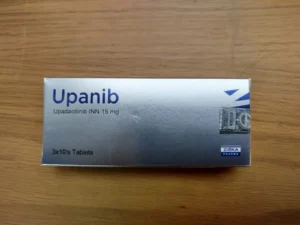
Upadacitinib (Upanib 15 mg): Uses, Mechanism, Side Effects, and More
Your rheumatologist just mentioned upadacitinib. Or maybe you searched it after a Reddit thread lit up with rave reviews for eczema. Either way, you’re here because you want the full picture not just a package insert summary.
This guide answers all of that. It’s built on FDA prescribing information, peer-reviewed clinical trials, and global regulatory data. Read it straight through or jump to the section that matters most to you.
Summary
Upadacitinib is an oral JAK inhibitor used to treat several immune-driven inflammatory diseases, including rheumatoid arthritis, psoriatic arthritis, ulcerative colitis, Crohn’s disease, ankylosing spondylitis, atopic dermatitis, and in some markets giant cell arteritis. Upanib 15 mg contains upadacitinib 15 mg and is used under specialist supervision when a doctor decides that targeted immune therapy is appropriate.
What is Upadacitinib?
Upadacitinib is a prescription oral medicine that reduces harmful inflammation in autoimmune and inflammatory disease. It belongs to a class of targeted immune therapies called Janus kinase inhibitors, often shortened to JAK inhibitors. In plain language, it helps block internal immune signals that keep inflammation switched on.
Doctors use upadacitinib when a patient has moderate to severe inflammatory disease and needs more than basic symptom relief. It is commonly used after older medicines have not worked well enough, caused side effects, or are no longer controlling the disease.
What is Upanib 15 mg?
Upanib 15 mg is a tablet that contains upadacitinib 15 mg as the active ingredient. It is positioned as a targeted oral treatment option for inflammatory diseases where JAK pathway inhibition may help control symptoms and disease activity.
Patients often look for Upanib 15 mg upadacitinib tablets when they want a once-daily oral option instead of injectable therapy, or when they are exploring export supply for a doctor-prescribed medicine. It should only be used under medical supervision because the drug can affect infection risk, blood counts, liver enzymes, lipids, and cardiovascular risk.
Upadacitinib Brand Name, Generic Status, and Drug Class
Upadacitinib brand name
The best-known upadacitinib brand name is Rinvoq. In regulated markets, patients may see the medicine listed under Rinvoq prescribing information or Rinvoq upadacitinib FDA label documents. In export and international pharmacy channels, patients may also encounter branded generics or alternative trade names such as Upanib 15 mg.
Upadacitinib brand vs generic
A common search is upadacitinib generic. In many countries, the originator product is still the dominant reference brand, while in other supply channels patients may search for generic upadacitinib or equivalent export products. Availability depends on local patent rules, registration status, and supplier licensing.
Upadacitinib drug class
Upadacitinib drug class:
- Janus kinase inhibitor (JAK inhibitor)
- Often described as a selective JAK1 inhibitor
- Falls under advanced immunomodulatory therapy for autoimmune and inflammatory disease
Is upadacitinib an immunosuppressant?
The answer is yes. In simple terms, upadacitinib affects the immune system by calming down the parts that cause inflammation in the body. This is why it can help treat conditions like rheumatoid arthritis and other inflammatory diseases.
Because it lowers part of the immune response, it can also make it harder for your body to fight infections. That is why doctors watch for side effects and infection risks while you are taking it.
Upadacitinib Mechanism of Action and Target
Upadacitinib works by calming down an overactive immune system. In many inflammatory diseases, the body sends too many signals that cause swelling, pain, redness, and irritation. Upadacitinib helps block some of these signals so the inflammation can be reduced.
It mainly targets a pathway in the body called the JAK pathway, especially JAK1. This pathway helps immune cells communicate with each other. When it becomes too active, it can lead to ongoing inflammation and symptoms in conditions like rheumatoid arthritis, eczema, and inflammatory bowel disease.
By blocking JAK1, upadacitinib helps slow down the inflammatory process. This can improve symptoms such as joint pain, skin irritation, stiffness, and swelling, depending on the condition being treated.
Are There Alternatives to Rinvoq? Here’s Where Upanib Fits In
If you’ve been prescribed Rinvoq (upadacitinib) but the price feels out of reach, you’re not alone. Rinvoq is a powerful treatment used for inflammatory conditions like rheumatoid arthritis, atopic dermatitis, psoriatic arthritis, ankylosing spondylitis, ulcerative colitis, and Crohn’s disease but its brand-name cost can be a real barrier for many patients.
For patients who are already doing well on Rinvoq but are struggling with the cost, Upanib may be one of the most straightforward alternatives to discuss with a healthcare provider. Instead of changing to a different mechanism of action or a different dosing experience, you may be able to stay on upadacitinib treatment while reducing the financial burden.
The good news is that Rinvoq is not your only option. Depending on your diagnosis, treatment history, response, and budget, your doctor may discuss several alternatives. These can include other JAK inhibitors, biologic medications, and in many cases, a generic alternative to Rinvoq such as Upanib.
At EmergencyDrug, one of the most practical options for people looking for a more affordable substitute is Upanib, a generic version of upadacitinib. Since it contains the same active ingredient as Rinvoq, it’s often the closest alternative for patients who want the benefits of upadacitinib without paying the premium price attached to the brand.
Other Alternatives to Rinvoq (Upadacitinib)
Yes, there are additional alternatives your doctor may discuss depending on your condition, treatment goals, and medical history. These may include:
Olumiant (baricitinib)
Olumiant is another oral JAK inhibitor used in inflammatory conditions such as rheumatoid arthritis. It is often considered when comparing oral targeted therapies.
Jakafi (ruxolitinib)
Jakafi works differently in terms of approved uses. It is generally associated with blood disorders such as myelofibrosis and polycythemia vera, so it is not a direct substitute for many of the same conditions treated with Rinvoq.
Litfulo (ritlecitinib)
Litfulo is a newer targeted therapy used for alopecia areata. While it may come up in broader discussions around JAK-pathway medicines, it is not a direct replacement for Rinvoq in most autoimmune conditions.
Which Rinvoq Alternative Makes the Most Sense?
That really depends on what you’re treating and why you’re switching.
If you’re switching because Rinvoq is too expensive, then Upanib may be one of the most practical alternatives to consider first, because it keeps you on upadacitinib, the same active ingredient used in Rinvoq.
If you’re switching because:
- you want a different mechanism of action, options like Humira or Dupixent may come up
- you didn’t respond well to upadacitinib, another JAK inhibitor such as Xeljanz, Cibinqo, or Olumiant may be discussed
- You prefer oral treatment over injections, Upanib, Rinvoq, Xeljanz, Cibinqo, and Olumiant may be more appealing than injectable biologics
What Is Upadacitinib Used For?
Patients often ask what is upadacitinib used for. The answer depends on the country, the exact label, and the specialist’s treatment plan, but upadacitinib now has a broad inflammatory disease footprint.
FDA upadacitinib uses and major approved indications
At Emergency Drug, we often receive questions about the FDA-approved uses of upadacitinib. This advanced JAK inhibitor is approved for several chronic inflammatory and autoimmune conditions, including rheumatoid arthritis, psoriatic arthritis, atopic dermatitis, ulcerative colitis, Crohn’s disease, ankylosing spondylitis, non-radiographic axial spondyloarthritis, selected juvenile arthritis indications, and giant cell arteritis in approved settings.
For patients living with these conditions, upadacitinib can help reduce inflammation, relieve symptoms such as pain, stiffness, and swelling, and improve overall quality of life when other treatment options have not provided adequate results.
One of the most searched topics today is upadacitinib for Crohn’s disease, as it became the first FDA-approved oral treatment for certain adults with moderately to severely active Crohn’s disease. We also frequently see interest in upadacitinib for alopecia areata.
While early clinical data and patient experiences appear encouraging, approval status may vary by country and indication, so patients should always consult a qualified dermatologist before considering treatment. At Emergency Drug, we strongly recommend that all treatment decisions involving upadacitinib especially for serious conditions such as giant cell arteritis be guided by experienced healthcare specialists to ensure safe and effective use.
Upadacintib Uses of Eczema Conditions
At Emergencydrug, we understand how exhausting eczema can be, especially, when the itching, redness, dryness, and flare-ups start affecting your sleep, confidence, and everyday comfort.
Upadacitinib is a modern targeted treatment used for moderate to severe eczema (atopic dermatitis) in patients who need more than creams or topical treatments alone. It works by calming the overactive immune signals that drive inflammation in eczema, helping reduce itching, skin irritation, rash severity, and recurring flare-ups.
Many patients turn to upadacitinib when traditional therapies no longer provide enough relief, and it has become an important option for improving skin healing and overall quality of life. At Emergencydrug, we aim to make trusted eczema treatments more accessible while helping you better understand how advanced therapies like upadacitinib can support long-term symptom control under proper medical guidance.
Upadacitinib Dose
Upadacitinib dose basics
The correct upadacitinib dose depends on:
- the disease being treated
- severity of disease
- liver function and kidney function
- infection history
- age
- concurrent medicines
- the official label in the patient’s country
Upadacitinib Breastfeeding Lactmed
According to the FDA prescribing information and LactMed data, upadacitinib is present in animal milk, and it is likely present in human breast milk as well. No data exist on concentrations in human milk or effects on a breastfed infant.
Given the potential for serious adverse effects in a nursing infant including immunosuppression breastfeeding is not recommended during treatment with upadacitinib. Women should also avoid breastfeeding for at least 6 days (approximately 10 half-lives) after the last dose.
Upadacitinib breastfeeding decisions should be made jointly between the patient and their physician, taking into account the benefits of treatment for the mother versus the potential risks to the infant.
Upadacitinib Price Comparison Table 2026 /
Rinvoq (upadacitinib) vs Olumiant (baricitinib) vs Xeljanz (tofacitinib)
vs Upanib / Baricinix / Tofacent
| Brand Name | Generic Name | Drug Class | Brand Type | Manufacturer | Common Tablet Strengths | Key Comparison Note | Price |
|---|---|---|---|---|---|---|---|
| Upanib | Upadacitinib | JAK inhibitor | Generic / regional brand | Ziska Pharmaceuticals Ltd. | Usually 15 mg | Contains upadacitinib, so it is not the same as Xeljanz | $65 |
| Rinvoq | Upadacitinib | JAK inhibitor | Innovator / reference brand | AbbVie | Usually 15 mg | Rinvoq is the reference upadacitinib brand | Approx.
$7,000–$9,250 |
| Tofacinix | Tofacitinib | JAK inhibitor | Generic / regional brand | Beacon Pharmaceuticals Limited | Usually 5 mg and 10 mg | Contains tofacitinib and is closer to Xeljanz | $65 |
| Tocit | Tofacitinib | JAK inhibitor | Generic / regional brand | Drug International Limited | Usually 5 mg and 10 mg | Same active ingredient family as Xeljanz | $50 |
| Tofaxen | Tofacitinib | JAK inhibitor | Generic / regional brand | Everest Pharmaceuticals Limited | Usually 5 mg and 10 mg | Tofaxen is generally compared as a tofacitinib alternative | $45 |
| Baricinix | Baricitinib | JAK inhibitor | Generic / regional brand | Beacon Pharmaceuticals Limited | Commonly 2 mg and 4 mg | Contains baricitinib, so it is different from tofacitinib and upadacitinib | $110 / $125 |
| Xeljanz | Tofacitinib | JAK inhibitor | Innovator / reference brand | Pfizer | 5 mg, 10 mg, XR 11 mg, XR 22 mg | Xeljanz is the reference tofacitinib brand | $4,500 |
Important note on price: prices for these medicines vary a lot by country, pack size, insurance coverage, coupon programs, wholesaler source, and whether you’re looking at US cash price vs international generic export price. So the table above is best used as a relative pricing / positioning guide, not as a universal fixed-price list.
Insurance & Financial Assistance (US Patients)
- myAbbVie Assist: AbbVie’s patient assistance program. Eligible uninsured patients may receive Rinvoq at low or no cost. Visit AbbVie’s website for eligibility criteria.
- Insurance coverage: Most major US insurance plans require step therapy (failure of a TNF blocker first) before approving Rinvoq.
- Medicare Part D: Coverage varies by plan. Patients may face significant cost sharing.
- Rinvoq generic launch timeline US: As of 2026, no FDA-approved generic of upadacitinib has launched in the United States. Patent exclusivity for Rinvoq is expected to run through the late 2020s to early 2030s.
How to take an upadacitinib tablet
- Take once daily, unless your doctor tells you otherwise
- Take it at the same time each day
- It may usually be taken with or without food
- Swallow extended-release tablets whole unless the product information says otherwise
- Do not double a dose if you miss one unless your prescriber specifically instructs you to
Upadacitinib Side Effects and Safety Warnings
Upadacitinib side effects: common, important, and rare
Like many medicines that affect the immune system, upadacitinib can cause side effects. Some are mild and manageable, while others are rare but serious and need quick medical attention.
Common side effects of upadacitinib
These are the side effects patients may notice more often:
- Cold-like or upper respiratory symptoms
- sore throat
- runny nose
- stuffy nose
- Nausea
- feeling sick to your stomach
- mild stomach upset
- Cough
- Headache
- Acne
- some patients may develop pimples or acne-like skin changes
- Shingles (herpes zoster)
- this can happen in some patients, especially if their immune system is weaker
- Higher cholesterol or fat levels in the blood
- this usually shows up on a blood test, not as a symptom you can feel
- Changes in blood test results
- liver enzyme changes
- changes in blood cell counts
Important safety warnings with upadacitinib
Upadacitinib has important safety warnings, so patients should use it under a doctor’s supervision and have regular checkups.
Serious side effects and risks
Although these are less common, they are important to know about:
- Serious infections: because upadacitinib lowers immune activity, it may make it harder for your body to fight infections
- Tuberculosis (TB) reactivation: if you had TB in the past, it may become active again
- Higher risk of certain cancers: this includes some types of malignancy or cancer
- Heart and blood vessel problems: some patients may have a higher risk of major cardiovascular events such as heart attack or stroke
- Blood clots: clots can form in the legs or lungs and may become dangerous
- Digestive tract perforation: in rare cases, a hole can form in the stomach or intestines
- Changes in blood tests
These may include:- low neutrophils (a type of white blood cell)
- low lymphocytes
- anemia (low red blood cells)
- high liver enzymes
- high cholesterol or lipid levels
- Increased risk of death in certain high-risk patients
- this warning mainly applies to people with certain risk factors, especially related to heart disease, smoking history, or older age
Important note for patients
Not everyone gets the same side effects. The risk can depend on:
- your dose of upadacitinib
- the condition being treated
- your age and overall health
- other medicines you are taking
- whether you have a history of infections, blood clots, heart disease, or liver problems
When to call your doctor right away
Get medical help quickly if you have symptoms such as:
- fever, chills, or signs of infection
- shortness of breath
- chest pain
- swelling or pain in the leg
- severe stomach pain
- unusual bruising or bleeding
- yellowing of the skin or eyes
- extreme tiredness or weakness
JAK Inhibitor Comparison: Upadacitinib vs Baricitinib vs Tofacitinib and More
One of the most commonly asked questions is: Rinvoq vs Xeljanz vs Olumiant which is best? Here is a detailed comparison of the major JAK inhibitors available globally, including products available through specialty distributors in GCC, Middle East, Australia, and New Zealand markets:
JAK Inhibitor Comparison Chart 2026
| Brand Name | Generic Name | JAK Selectivity | Major Approved Indications | Standard Adult Dose | Oral? |
|---|---|---|---|---|---|
| Rinvoq / Upanib | Upadacitinib | JAK1-selective | RA, PsA, AD, UC, CD, AS, nr-axSpA, AA | 15 mg once daily | Yes |
| Olumiant / Baricinix | Baricitinib | JAK1 + JAK2 | RA, AD, Alopecia Areata | 2–4 mg once daily | Yes |
| Xeljanz / Tofacinix / Tofaxen/ Tocit | Tofacitinib | Functional JAK1 + JAK3 inhibition (with some JAK2 activity) | RA, PsA, UC, AS, pJIA | 5 mg twice daily or 11 mg XR once daily | Yes |
| Jakafi | Ruxolitinib | JAK1 + JAK2 | Myelofibrosis, Polycythemia Vera (PV), Acute & Chronic GVHD | 5–25 mg twice daily | Yes |
If you’re comparing Rinvoq vs Xeljanz vs Olumiant, it’s important to understand that all three are JAK inhibitors, but they differ in their approved uses, dosing, safety profiles, and selectivity. A detailed JAK inhibitor comparison chart can help patients and healthcare providers evaluate which treatment may be most appropriate for conditions such as rheumatoid arthritis, psoriatic arthritis, ulcerative colitis, and upadacitinib for eczema (atopic dermatitis).
While Rinvoq (upadacitinib) is often praised for its effectiveness in inflammatory diseases, many patients also search for alternatives to Rinvoq, including Xeljanz (tofacitinib) and Olumiant (baricitinib), especially when considering cost, availability, or insurance coverage.
For patients looking for affordable treatment options, generic upadacitinib is available in several international markets, including Turkey and Egypt, Upanib can be the alternative to Rinvoq.
FAQs
Ques. 1: Can I get something similar to Rinvoq without paying Rinvoq prices?
Ans: Yes, Upanib is a similar to Rinvoq with a much lower prices than brand Rinvoq. Both medicines belong to the same generic Upadacitinib.
Ques. 2: Does upadacitinib cause weight gain?
Ans: Patients often ask does upadacitinib cause weight gain. Weight gain is not the classic hallmark side effect on label summaries, but real-world discussion boards like Reddit and patient forums mention weight gain, acne, recurrent viral infections, and concern about clots, especially in Crohn’s disease and UC communities, but these are anecdotal experiences and should not replace formal safety guidance.
Ques. 3: Are there any alternatives to Rinvoq?
Ans: There are several alternatives to Rinvoq, including Dupixent, Humira, Xeljanz, Cibinqo, Olumiant, Jakafi, and Litfulo. But if your goal is to find a generic substitute for Rinvoq itself, then Upanib stands out as one of the most important options to know about.
Ques. 4: Can I Buy Upadacitinib Without a US Prescription?
Ans: Upadacitinib is a prescription medication in all major markets. A valid prescription from a licensed physician is required regardless of where you order from. Emergency Drug does not dispense without a prescription. This protects your safety upadacitinib has serious safety considerations (boxed warning) that require medical oversight.
Ques. 5: How does upadacitinib compare to Xeljanz (tofacitinib)?
Ans: Both are oral JAK inhibitors, but they target different JAK enzymes. Upadacitinib selectively inhibits JAK1; tofacitinib inhibits JAK1 and JAK3. In terms of dosing, upadacitinib’s once-daily schedule is simpler than tofacitinib’s standard twice-daily regimen. Upadacitinib has a broader indication list, including alopecia areata, giant cell arteritis, and Crohn’s disease, which tofacitinib does not cover. Both carry the same class-wide boxed warning.
Conclusion
Upadacitinib is one of the most significant advances in oral autoimmune therapy in the past decade. Its selective JAK1 inhibition gives it a clean mechanism, once-daily dosing, and a broad range of FDA-approved uses from rheumatoid arthritis and psoriatic arthritis to eczema, Crohn’s disease, alopecia areata, and giant cell arteritis.
It is not risk-free. The boxed warning about infections, cancer, cardiovascular events, and blood clots is serious and must be understood by every patient and prescriber. But for the right patient one who has not responded to TNF blockers or whose disease is significantly affecting quality of life the benefit often outweighs the risk.
For patients in the UAE, Saudi Arabia, Qatar, Kuwait, Bahrain, Oman, Syria, Yemen, Jordan, Lebanon, Egypt, Turkey, Australia, and New Zealand: access to upadacitinib is improving. Upanib 15 mg and similar internationally-manufactured formulations offer a pathway to therapy for patients who cannot afford or access brand-name Rinvoq.
Medical Disclaimer: This content is for informational purposes only and does not replace professional medical advice. Always consult a licensed healthcare provider before starting, stopping, or changing any medication. A valid prescription is required to purchase Upanib 15 mg.


